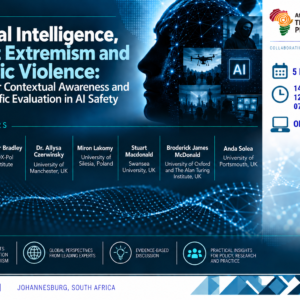
AfATAP’s first in-person conference

Keynote speaker: Dr Russell Palarea (USA)
Keynote presentation 1: Stalking and Domestic Violence: From Academic Research to Law Enforcement and Security Applications
Stalking behavior can be a critical risk factor in assessing violence risk and movement toward committing a violent attack. This presentation will use an elemental analysis approach to understanding behaviors that comprise a stalking course of conduct. The variety of victim-subject relationships and motives for committing stalking behaviors will be discussed. Particular focus will be given to intimate relationships and the use of stalking within domestic violence. The presenter will discuss findings from his research projects on Los Angeles Police Department stalking investigations and on stalking behaviors conducted by convicted domestic violence perpetrators. A case study will be used to illustrate the behavioral risk factors in a domestic violence stalking case.
Keynote presentation 2: “This One’s the Real Deal”: A Case Study in Preventing a Mass Shooting
This case study provides a behavioral analysis of an investigation into a plot to commit a mass shooting. The case study will address key elements of the threat assessment process, including a statement content analysis of a threat letter, development of the investigative plan, identification of attack-preparation behaviors, conducting the threat assessment, and designing the threat management strategies. The case study will highlight the threat management partnerships with law enforcement agencies, prosecutors, probation officers, the subject’s family members, and the subject’s psychiatrist. The assessment of violence risk will be analyzed by applying the investigative findings to Dr. Palarea‘s Holistic Threat Assessment model (2021).

Dr Ngao Motsei (South Africa)
Presentation: Workplace Bullying: Diffusing the silent epidemic by addressing the problem of abrasive leaders.
Workplace bullying is a complex phenomenon which occurs in a number of different ways, some easy to recognise and identify, others more subtle and difficult to explain. Bullying at work is often considered as some form of a euphemism for harassment, intimidation, discrimination and victimisation. It is for these, and other reasons that bullying tends not to be freely spoken about in the workplace. This is why bullying at work is often referred to as a ‘silent epidemic’. Unlike harassment, there is no universally agreed definition of workplace bullying. However, there is general agreement on bullying behaviours and/or forms of bullying, and the distinguishing features. The multiple faces of bullying include (i) physical aggression, e.g. threats, public humiliation; (ii) verbal bullying, e.g. shouting, ridiculing, etc; (iii) mobbing, e.g. ganging against the bully; (iv) abuse of legal processes, e.g. disciplinary / dismissal threats, etc. Bullying features are persistence (occurs over time), escalation (intensifies over time) and patterned negative acts. Interventions aimed at addressing bullying at work often exclude bullies, also referred to as abrasive leaders. Calls are being made for more research and interventions to include abrasive leaders, to address this silent epidemic permanently.

Prof Gérard Labuschagne (South Africa)
Presentation 1: Stalking of a corporate CEO: A South African case study: from the obscure to the dangerous
Threats are dynamic in nature, a person who is low-risk one day, can become high-risk later because people, and their circumstances, change. This can lead the inexperienced threat assessor into disregarding a threat actor because the initial assessment was low risk. This case study highlights the dynamic nature of threats, the role of mental health in stalking behaviour, and the creativity needed to successfully manage threats. In early 2018 a disgruntled ex-employee held a one-person protest outside the current place of employment of the CEO from his previous place of employment. He blamed the CEO for his dismissal 11 years prior, in 2007. Initially the level of threat was considered low. However, within two months the ex-employee’s threat level changed drastically. The presenter was the threat assessor hired by the corporate to assist in this case. This case study will illustrate how this threat was assessed, monitored and managed.
Presentation 2: Right wing terrorism in South Africa: A threat assessment case study using the Terrorist Radicalization Assessment Protocol (TRAP-18)
In November 2019 the Crimes Against the State (CATS) Unit of the South African Police Service arrested senior members of the National Christian Resistance Movement, also known as the Crusaders, on the eve of the execution of their plan to take over the country. This plan involved simultaneous attacks on police stations, military bases, black townships, and shopping malls. The top role players, including ‘General’ Harry Knoesen, were charged with acts of Terrorism under South Africa’s terrorism legislation. While his co-conspirators pleaded guilty to the charges, Knoesen represented himself and went on trial. After being convicted in 2022 the National Prosecuting Authority requested the presenter to conduct a threat assessment of Knoesen to be used at sentencing proceedings. This presentation will highlight the Crusaders plan and use the TRAP-18 (Terrorist Radicalization Assessment Protocol) structured professional guideline to assess Knoesen’s level of radicalization and threat. This case study will include videos made by Knoesen distributed to his followers to instigate and motivate their participation in the Black Friday Revolution.

Prof Jaco Barkhuizen (South Africa)
Presentation: Sexual Victimization on trains and busses: The chikan problem in South East Asia
Sexual victimisation of passengers in the public transport sector is a mostly unspoken or hidden problem. This paper asserts that social problems have to be created and describes the early developmental stages of the problem in Japan. Contemporary victimological theories, which are applied to explain multiple victimisation in this field, were deemed unsatisfactory, therefore an instrument, developed for Japan, and was adjusted for Indonesia. The risk perception amongst victims, emotional reaction and communication patterns were interpreted within the framework of locus of control and shame. Furthermore, a brief analysis is stated on the Japanese offender profile.

Adv Herman Bosman (South Africa)
Presentation: South Africa and the Kidnapping Cancer
This presentation will discuss the current status of kidnappings in South Africa and the responsibility to take ownership. Prevention is key, as kidnappings have escalated in number, types as well as sophistication. Understanding the threat empowers you to implement the correct measures preventing and managing an incident.

Ms Michelle Calhoun (USA/Kenya)
Presentation: All Together Now…and Later: Threat Assessment Teaming for Case Success
Essential to the threat assessment and management process is comprehensive creation and sustainment of threat assessment teams within an organization. Core disciplines rest at a team nucleus; however, for cases that require extensive networking and coordination throughout an organization for a sustained amount of time, threat assessment team relationships and communication are essential. This presentation will discuss the importance of threat assessment team creation, team building, and team sustainment as a parallel to a years long case study involving an individual with significant mental health needs and employment challenges.
Through the presentation, the participants will consider:
- Threat assessment teaming formations suited for different organizations
- Threat assessment teaming research for quality operation and sustainment
- Threat assessment teaming applied in real practitioner circumstance and implemented in parallel with a complex teaming case with an extended timeline.

Dr Stephen Hart (Canada)
Presentation 1: Workplace Violence Threat Assessment: How to Identify and Mitigate Potential Problems Stemming from Parallel Investigations
Whenever a workplace violence threat assessment is conducted, it is possible – and even likely – that other investigations are being considered or already underway. Depending on the nature of the workplace and the incidents that triggered the threat assessment, parallel investigations may include such things as fitness for duty or return to work investigations; workplace climate, disciplinary, bullying, harassment, sexual misconduct, and human rights investigations; and even police or national security investigations. Improperly conducted workplace violence threat assessments can inadvertently impede or render invalid parallel investigations; in the worst-case scenario, they can obstruct justice by interfering with active police investigation of a criminal offence. In this presentation, Dr. Hart will discuss the parallel investigations most commonly encountered in the course of workplace violence threat assessments. He will then outline the steps organizations and threat assessment professionals can take to identify and mitigate any actual or potential adverse consequences stemming from parallel investigations. He will illustrate his major points through the use of case examples and presentation of a case study.
The goals of this presentation are: (i) to increase awareness of the problems due to parallel investigations in workplace violence threat assessments; and, (ii) to provide organizations and threat assessment professionals with recommendations for how to identify and mitigate any actual or potential adverse consequences stemming from parallel investigations. The presentation is targeted both at threat assessment professionals and at the executives, managers, administrators who oversee the workplace violence threat assessments conducted by internal teams or external consultants.
The first part of the presentation (10 mins) will focus on increasing awareness and knowledge of the problem through the use of case examples. The key point here is that parallel investigations occur frequently and have the potential to cause serious complications for all parties concerned.
The second part of the presentation (15 mins) will focus on enhancing knowledge and skills with respect to identification and mitigation of the problem through presentation of recommendations for policy and practice. The key point here is that by identifying, communicating with, and collaborating with other agencies that are (or are likely) to be conducting parallel investigations, it is possible to mitigate or avoid altogether potential complications.
The third part of the presentation (15 minutes) will illustrate key points through presentation of a case study. The key point here is to reinforce any awareness, knowledge, and skills gained by attendees during the presentation.
Finally, time (10 minutes) will be allotted for questions from participants. The key point here is to provide attendees with the opportunity to seek clarification of material presented or further information.
Presentation 2: Masterclass: Violence and Mental Illness in Risk Assessment
Abstract
Symptoms of mental illness are an established risk factor for many forms of violence, ranging from family violence to terrorism. But mental illness is complex, as is the nature of the association between mental illness. In this presentation, Dr. Hart will focus on the forms of mental illness most relevant to threat assessment, including Substance-Related and Addictive Disorders, Schizophrenia-Spectrum and Other Psychotic Disorders, Personality Disorders, and Paraphilic Disorders. For each of these forms of mental illness, he will identify the major symptoms and explain their association with violence. He will then discuss best practices with respect to assessing both the presence of (potential) symptoms of mental illness and their relevance with respect to threat management.
Presentation Outline
The goals of this presentation are to: (i) increase awareness of the importance of mental illness in threat assessment; and (ii) improve practice skills related to threat assessment and management in cases where mental illness may be an issue. The presentation is targeted at threat assessment professionals regardless of their background (law enforcement, security, mental health, etc.) or level of experience.
The first part of the presentation (10 mins) will highlight the importance of mental illness with respect to threat assessment and management from both professional and legal perspectives.
The second part of the presentation (50 mins) will discuss the forms of violence most relevant to violence, including the major symptoms and their association with violence.
The third part of the presentation (30 minutes) will discuss best practices with respect to threat assessment and management in cases where mental illness is (potentially) relevant.
The presentation will end with a question-and-answer session (20 minutes) to provide attendees with the opportunity to seek clarification of material presented or further information.

Colonel Tollie Vreugdenberg (South Africa)
Presentation: The targeting of a South African retailer by Islamic extremists: A case study
Between April and July 2018, a major South African retailer, and other small businesses, became the target of a radical Islamic extremist group. Over the period of 2 days in July 3 incendiary devices were detonated or discovered inside the major retailers shops across Durban. These were then linked to other incendiary devices found at other small businesses, a racecourse, and a Mosque in the greater Durban area between April and July- 9 scenes in total, as the investigation progressed. This case study will highlight how these events unfolded, and its link to financing terrorism, and the group behind the attacks. Suggestions on how such events should be managed will also be discussed, as well as the general terrorist risk to South African businesses in the future, and regulatory expectations of businesses that will come into effect in 2023.

Dr Peter Collins CD, MD, MCA, FRCPC (Canada)
Presentation: Delusional Disorders, delusional “like” disorders and over-valued ideas in assessing threats
Delusional disorders are not common, but individuals who meet the criteria for this diagnosis are over-represented in the field of threat assessment. These individuals have one or more delusions, but except for these delusions they tend not to be considered odd or functionally impaired. Unlike other conditions that feature delusions, such as schizophrenia, delusional disorders tend to develop in the fourth, fifth or sixth decade of life. Attendees will learn about the five subtypes of delusional disorders and how their occur in threat assessments. Also discussed will be the role of over-valued ideas, how these differ from delusions and their relationship with conspiracy thinking. Case examples will be discussed.

Mr Cobus Van Jaarsveld (South Africa)
Presentation: Threat assessments at Higher Education Institutions – open sources, insider threats and security
Cobus van Jaarsveld, the Section Head: Threat Detection, Investigations, Compliance and Liaison within the Protection Service Department of the University of the Free State. He was appointed in the position at the beginning of 2019 after 31 years and 11 months service in law enforcement intelligence, where he was initially responsible for Intelligence and Threat Analysis functions, but later on as an Operational Intelligence Collection Commander focusing on issues related to national and border security.
He started his studies immediately after joining the South African Police in 1987 and completed his National Diploma (Police Administration), a Bachelor of Arts Degree with Political Science and Criminology and a Masters Degree in Governance and Political Transformation. He is a believer in life long learning and self-development and has completed several short courses related to security and information management.
Hourly Schedule
Day 1
- 08h45 - 10h00
- 0 First keynote presentation: Dr Russ Palarea (USA)
- Stalking and Domestic Violence: From Academic Research to Law Enforcement and Security Applications
-
Speakers:
Dr Russell Palarea - USA (Click for bio)
- 10h00 - 10h20
- Coffee
- 10h20 - 11h10
- Presentation 1: Dr Ngao Motsei (RSA)
- : Workplace Bullying: Diffusing the silent epidemic by addressing the problem of abrasive leaders.
-
Speakers:
Dr Ngao Motsei - South Africa (Click for bio)
- 11h10 - 12h00
- Presentation 2: Prof Gerard Labuschagne (RSA)
- Stalking of a corporate CEO: A South African case study: from the obscure to the dangerous
-
Speakers:
Prof Gérard Labuschagne - South Africa (Click for bio)
- 12h00 - 12h45
- Lunch
- 12h45 - 13h30
- Presentation 3: Prof Jaco Barkhuizen (RSA)
- Sexual Victimization on trains and busses: The chikan problem in South East Asia
-
Speakers:
Prof. Jaco Barkhuizen - South Africa (Click for bio)
- 13h30 - 14h15
- Presentation 4: Adv Herman Bosman (RSA)
- South Africa and the Kidnapping Cancer
-
Speakers:
Adv Herman Bosman - South Africa (Click for Bio)
- 14h15 - 15h00
- Presentation 5: Ms Gurdip Rai (UK)
- Working with cross functional partners to manage threats in the world today: Insights from Google’s C.A.R.E. program
- 15h00 - 15h20
- Coffee
- 15h20 - 16h10
- Presentation 6: Ms Michelle Calhoun (Kenya)
- All Together Now…and Later: Threat Assessment Teaming for Case Success
- 16h10 - 17h00
- Presentation 7: Dr Stephen Hart (Canada)
-
Speakers:
Dr Stephen Hart - Canada (Click for bio)
- 08h30 - 08h45
- Welcome
Day 2
- 08h30 - 08h45
- Welcome
- 08h45 - 10h00
- First keynote presentation: Dr Stalking and Domestic Violence: From Academic Research to Law Enforcement and Security ApplicationsRuss Palarea (USA)
- Stalking and Domestic Violence: From Academic Research to Law Enforcement and Security Applications
-
Speakers:
Dr Russell Palarea - USA (Click for bio)
- 10h00 - 10h20
- Coffee
- 10h20 - 11h10
- Presentation 1: Dr Ngao Motsei (RSA)
- Workplace Bullying: Diffusing the silent epidemic by addressing the problem of abrasive leaders.
-
Speakers:
Dr Ngao Motsei - South Africa (Click for bio)
- 11h10 - 12h00
- Presentation 2: Prof Gerard Labuschagne (RSA)
- Stalking of a corporate CEO: A South African case study: from the obscure to the dangerous
-
Speakers:
Prof Gérard Labuschagne - South Africa (Click for bio)
- 12h00 - 12h45
- 12h00-12h45 Lunch 45 mins
- 12h45 - 13h30
- Presentation 3: Prof Jaco Barkhuizen (RSA)
- Sexual Victimization on trains and busses: The chikan problem in South East Asia
-
Speakers:
Prof. Jaco Barkhuizen - South Africa (Click for bio)
- 13h30 - 14h15
- Presentation 4: Adv Herman Bosman (RSA):
- South Africa and the Kidnapping Cancer
-
Speakers:
Adv Herman Bosman - South Africa (Click for Bio)
- 14h15 - 15h00
- Presentation 5: Ms Gurdip Rai (UK)
- Working with cross functional partners to manage threats in the world today: Insights from Google’s C.A.R.E. program
- 15h00 - 15h20
- Coffee
- 15h20 - 16h10
- Presentation 6: Ms Michelle Calhoun (Kenya):
- All Together Now…and Later: Threat Assessment Teaming for Case Success
-
Speakers:
Ms Michelle Calhoun - USA/Kenya (Click link for bio)
- 16h10 - 17h00
- Presentation 7: Dr Stephen Hart (Canada)
- Workplace Violence Threat Assessment: How to Identify and Mitigate Potential Problems Stemming from Parallel Investigations
-
Speakers:
Dr Stephen Hart - Canada (Click for bio)